
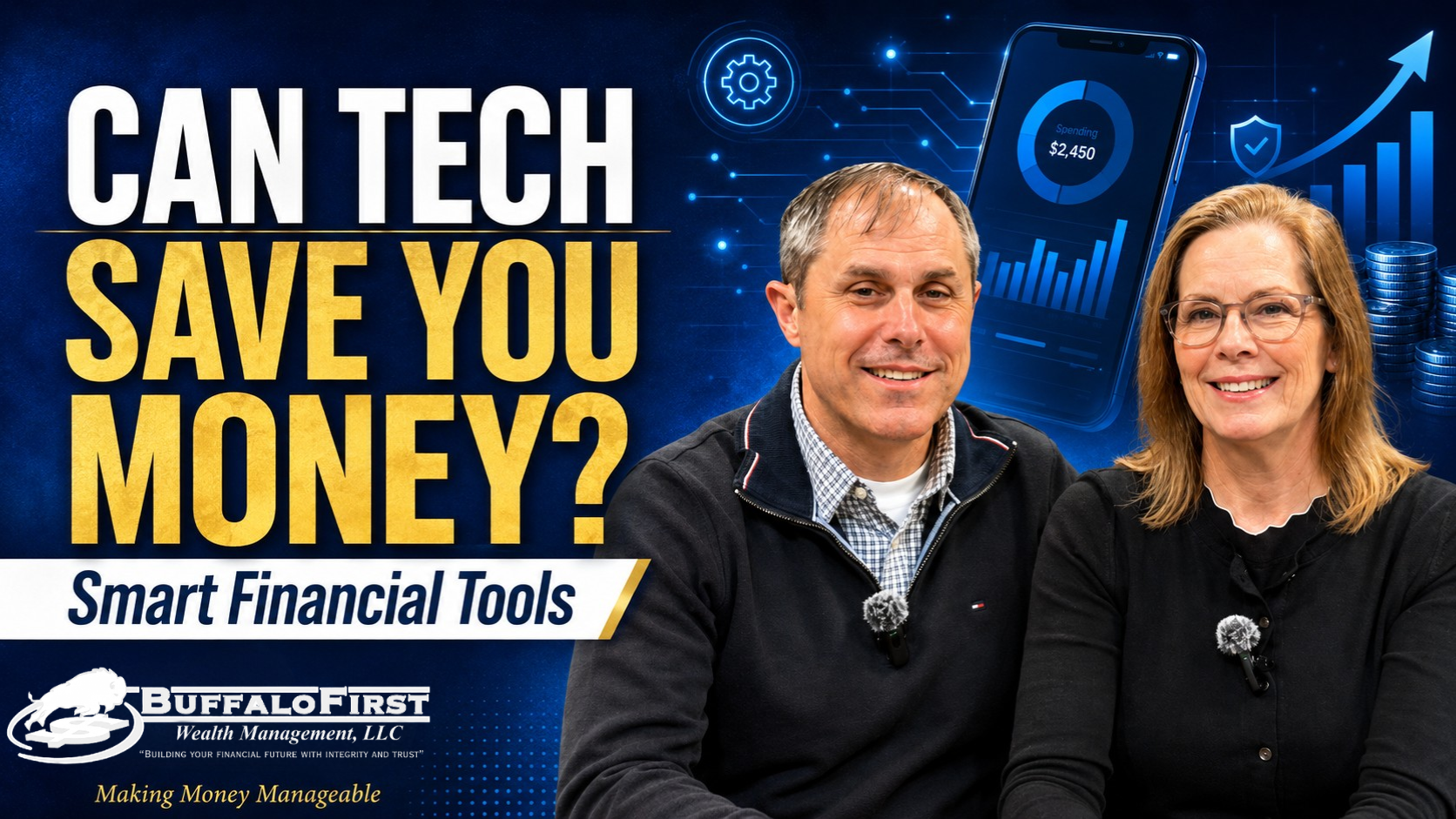
TL;DR Quick Answer: Yes—technology can save you money and time through higher-interest online banks, automatic bill pay and investing, paperless statements, and stronger security like two-factor authentication. The trick is to start small, keep some local banking for cash, and protect your passwords and account access.
In their latest episode of Making Money Manageable Again, Allen Dembski and Juliana Janson from Buffalo First Wealth Management tackle a question many people quietly wrestle with: can technology actually make your financial life better? Some folks love new tools. Others avoid them entirely. Both reactions are fine.
The honest answer is that you don’t need to change everything at once. You just need to start somewhere. Here’s the short version of what they covered.
Should you keep your savings in an online bank?
Many people hold large balances at traditional banks for years without realizing they could earn more elsewhere. Online-only banks often pay better interest rates because they don’t carry the cost of physical branches.
The advice from Buffalo First Wealth Management isn’t to abandon your local bank—it’s to be selective. Keep accounts where you need them, but consider moving larger, long-term balances to online options that pay more.
How can automation save you money each month?
Automation is one of the easiest wins. Setting up automatic bill pay can lower your interest rate on certain loans, since some lenders reduce rates when payments come straight from your bank account.
You can automate investing too. Schedule a monthly transfer from your checking account into an IRA, Roth IRA, or brokerage account, and you’ll never have to dig out a checkbook or buy a stamp again. (Postage runs about 70 cents per letter—small, but it adds up.)
One caveat: automatic transfers work best when your income is steady. Gig workers and self-employed people with spiky earnings can still automate investing, but they should watch their cash flow and adjust their contribution amounts accordingly.
And because you can’t deposit cash through your phone, keeping a local bank account makes sense if you regularly handle cash.
Are paper statements worth keeping?
Paper statements pile up fast, and many companies now charge around $5 to mail them. That fee feels minor month to month, but it adds up over a year—and over a lifetime.
Going paperless makes filing easier, since you can log in and pull up any document when you need it. The one thing to plan for: make sure a trusted person can access your accounts if something happens to you and you can’t manage them yourself.
How do you keep your passwords and accounts safe?
More accounts online means more passwords—and that scares people. (Allen admits he has three columns across four pages of them.) A secure, accessible place to store passwords matters, both for you and for a loved one who may need access in an emergency.
A few tips from the episode:
- Use fingerprint or face login where available. It’s faster and more secure than a password alone.
- Turn on two-factor authentication. Getting a texted code adds an extra step, but the protection is worth it.
- Decide where to store credentials—online, in writing, or both—based on how and when you’ll actually need to reach them.
Watch out for scams once you go digital
Here’s a detail many people miss: once you move accounts online, your financial institutions usually won’t call you. You’ll get an email or a message through your portal instead.
That means an unexpected phone call or text claiming to be your bank is a red flag. Phishing scams by phone and text are common, so treat surprise contact with caution.
Where should you start?
Pick one move that saves or earns you money. If a loan costs less when you pay automatically, set up that bill pay first. From there, add automated investing or switch a statement to paperless. Small steps build confidence.
The biggest hurdle is usually just making the first move—and plenty of people are willing to help you get there. You don’t have to go all-in, and you don’t have to do it alone.
Frequently asked questions
Are online banks safe for large balances?
Reputable online banks offer the same protections as traditional banks and often pay higher interest because they have no branch costs. Keep an eye on interest rates and confirm your accounts are insured.
What’s the easiest way to start using technology for my finances?
Begin with one money-saving action, such as setting up automatic bill pay on a loan that lowers your rate when payments are automated. Add more steps as you get comfortable.
Should I still keep a local bank account?
Yes, if you handle cash regularly. You can’t deposit cash through a phone, so a local bank remains useful alongside online accounts.
Is two-factor authentication really necessary?
It’s strongly recommended. The texted code adds a small step but a large layer of protection against unauthorized access.
How do I avoid scams after moving my accounts online?
Remember that financial institutions rarely call once you’re set up online. Be suspicious of unexpected calls or texts, and verify any contact directly through your official portal.
Stay tuned for our next post.
Let’s Help You With Your Retirement Planning
Call us and let’s start helping you with your financial planning needs so you can make the most of your money.